
















Managing Fever in Children: A Parent Guide


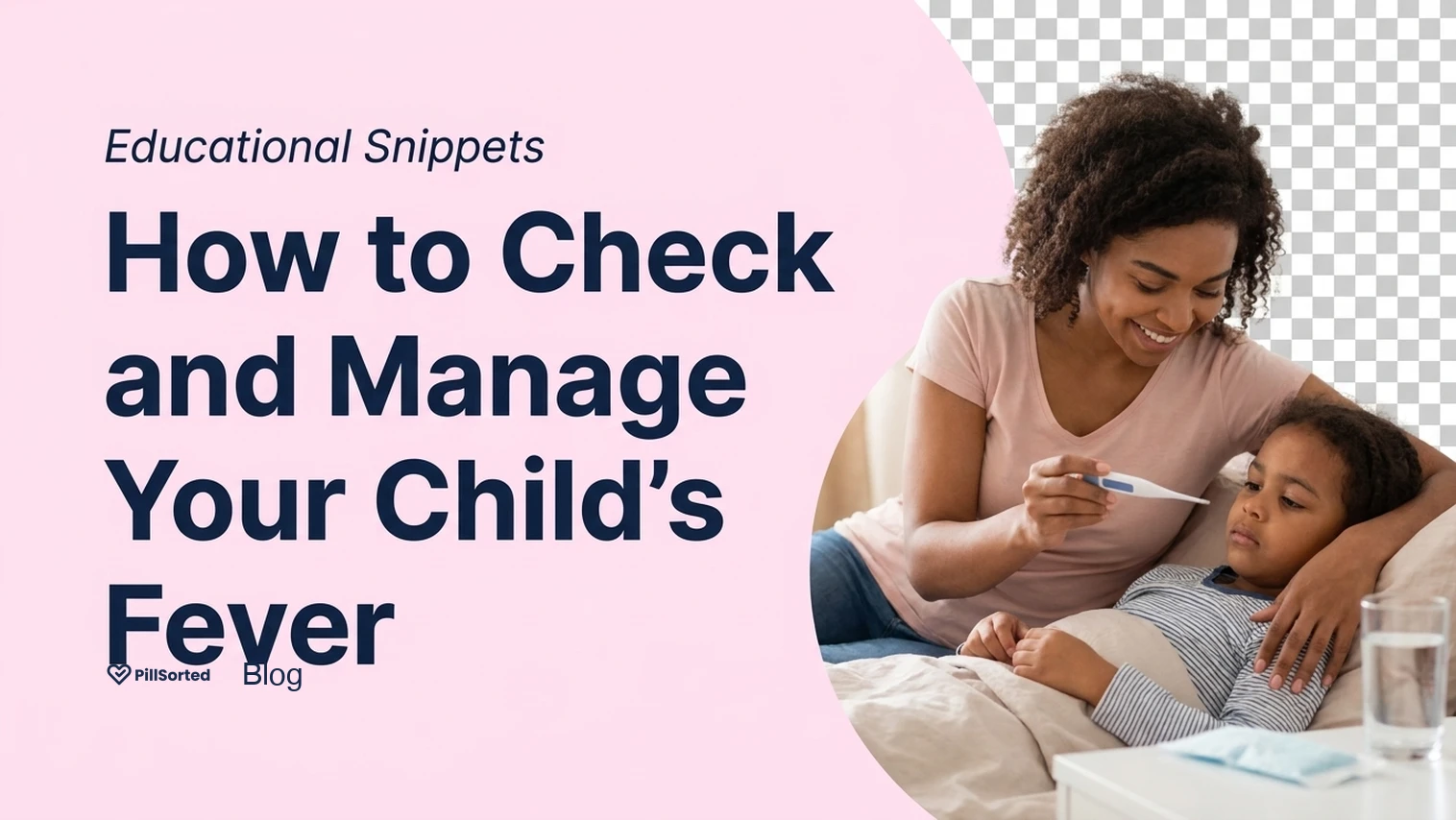
Noticing that your little one is feeling unwell can be a stressful experience for any parent, but understanding how to handle a high temperature can give you peace of mind. A high temperature or fever in children is extremely common and is simply the body’s natural defence mechanism working to cope with viral or bacterial infections. Pharmacist Zeinab Ardeshir from PillSorted shares practical advice on how to recognise early symptoms, take accurate temperature readings, and safely administer treatment at home to support your child’s recovery.
In this post:
- Recognising Early Signs of Fever in Children
- How to Accurately Take Your Child’s Temperature
- Understanding Fever in Children and Temperature Thresholds
- Choosing the Right Medication for a Fever in Children
- Non-Medicinal Ways to Gently Cool a Feverish Child
- How and When to Use Paracetamol Suppositories
- When to Seek Professional Medical Help for a Fever
Recognising Early Signs of Fever in Children
Before you even reach for a digital thermometer, your Paying close attention to subtle physical changes can help you spot the early stages of a high temperature quickly.
As Zeinab notes, one of the best giveaways that a child is becoming unwell is their eyes. You may notice that their eyes look unusually watery, glossy, or tired. In addition to changes in their eyes, children experiencing a fever may appear lethargic, overly clingy, or unusually flushed. Spotting these subtle signs early allows you to monitor their general health more closely and prepare appropriate care steps before their temperature rises further.
How to Accurately Take Your Child’s Temperature
A child’s body temperature can vary slightly depending on how and where it’s measured. The NHS recommends using a digital thermometer under the armpit for the most reliable reading in children, though ear and forehead thermometers are also commonly used. To get an accurate measurement, consider using one of the following standard thermometer types:
- Ear Thermometers: These digital devices are fast and reliable. To use one correctly, hold the probe near the ear canal without forcing it inside or pulling back on the child’s ear. Modern devices frequently feature traffic light colour indicators (such as green, amber, and red) to help parents and children quickly interpret the result.
- Underarm (Axillary) Thermometers: Standard digital thermometers placed under the armpit are effective, but they require sufficient time in position without any gaps or movement to yield an accurate result.
- Forehead Thermometers: Forehead strips or non-contact infrared scanners offer a convenient alternative, particularly for sleeping children. However, keep in mind that external factors such as forehead sweat or recent washing can temporarily alter surface temperature accuracy.
Regardless of the type of thermometer you choose, it is best practice to check the reading at least twice to ensure consistent and reliable results.
Understanding Fever in Children and Temperature Thresholds
Interpreting digital temperature readings correctly helps you decide whether your child simply needs rest or requires active fever relief medication.
A standard baseline body temperature sits at around 37°C. Knowing how to interpret readings above this standard helps you determine the best approach:
- Below 38°C (Mild Elevation): A reading below 38°C is only slightly raised. In older toddlers and children, this usually means monitoring them closely rather than immediately giving medication.
- 38°C or Higher (Fever): A reading of 38°C or above is classed as a fever. Medication isn’t always necessary — treat according to how uncomfortable or distressed your child seems, rather than the number on the thermometer alone.
Choosing the Right Medication for a Fever in Children
When active management is needed, both liquid paracetamol and ibuprofen are standard, safe options for lowering a high temperature. These medicines come in liquid suspensions designed for young children and are supplied with oral dosing syringes or measuring spoons for accurate administration.
Paracetamol oral suspensions are generally available in two strengths: 125mg/5ml and 250mg/5ml. You must always refer to the packaging dosing table to select the correct dose based on your child’s age bracket. Once opened, always check the patient information leaflet for storage instructions — most liquid paracetamol should be kept below 25°C rather than refrigerated.
If you choose to give ibuprofen, keep one important consideration in mind: children with asthma should only be given it after checking with a prescriber or healthcare professional. Furthermore, watch your child for any signs of a reaction after giving medicine. Developing an uneven skin rash or small bumps after taking paracetamol may indicate an allergic reaction, which requires medical review.
If advised by a healthcare professional, paracetamol and ibuprofen can sometimes be alternated for an ongoing fever, but this shouldn’t be done routinely without guidance.
Non-Medicinal Ways to Gently Cool a Feverish Child
Medication is not the only tool available when supporting a child with a high temperature. Simple, comforting home adjustments can play a crucial role in keeping your child comfortable during an acute illness, as part of their broader healthy living.
The overall priority when managing a fever is to help your child keep cool without causing distress. You can achieve this gently by using the following techniques:
- Giving your child a lukewarm bath.
- Placing lukewarm, damp towels gently on their forehead or feet.
- Dressing them in lightweight, breathable clothing.
Avoid using cold water or ice baths, as rapid cooling can trigger shivering, which actually raises the body’s core temperature.
How and When to Use Paracetamol Suppositories
Administering liquid medicine orally is not always possible. If a child suffers from severe nasal congestion, vomiting, or extreme distress, swallowing oral liquids can be difficult or impossible. In these specific circumstances, paracetamol suppositories offer an effective alternative.
Paracetamol suppositories are available in 125mg and 250mg strengths. They’re absorbed more slowly than liquid medicine taken by mouth, so may take around 30 to 60 minutes to start lowering your child’s temperature. For easier and smoother insertion, it is recommended to store suppositories in the fridge prior to use.
When to Seek Professional Medical Help for a Fever
While most fevers are harmless response mechanisms that resolve on their own, certain warning signs require prompt clinical advice. You should contact NHS 111 or consult a healthcare professional immediately if:
- The fever lasts beyond 48 hours.
- Your child shows clear signs of becoming dehydrated.
- The high temperature is accompanied by persistent vomiting or diarrhoea.
Trust your parental instincts. If you are ever uncertain about your child’s symptoms or overall well-being, reaching out to a health professional provides the tailored guidance you need.
Need Support or Have Questions?
If you have concerns or need further advice, our team at PillSorted is here to help. Contact us via our support portal: PillSorted Support.
Disclaimer: This blog post is for informational purposes only and does not constitute medical advice. Always consult a qualified healthcare professional before making changes to your health routine.


